
Tulane University Bruff Quad Dormitories – Phase II
- Home |
- Tulane University Bruff Quad Dormitories – Phase II
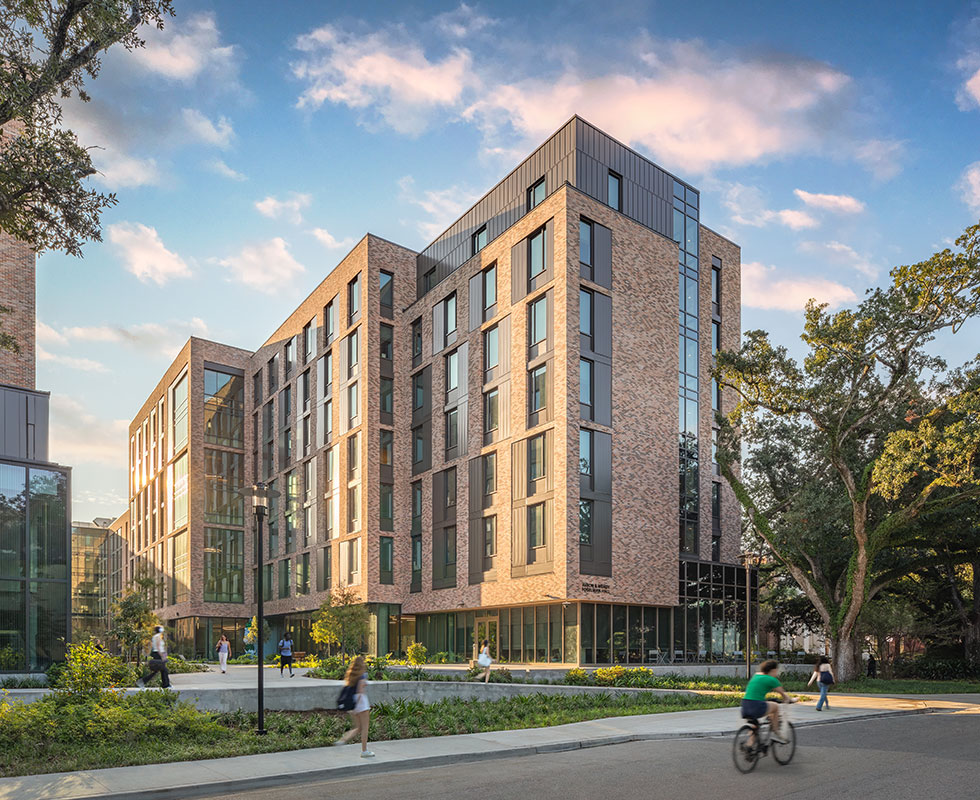
Tulane University Bruff Quad Dormitories – Phase II
- New Orleans, Louisiana
Technical Hurdles: Associated Design Group, Inc. (ADG Engineering) provided complete mechanical, electrical, plumbing, and fire protection engineering services for Fogelman Hall and Bayou Hall, two new student residential buildings totaling approximately 198,500 square feet across 13 floors. The primary engineering challenge was developing high-performance systems capable of efficiently serving a large and constantly changing student population while integrating the buildings with Tulane University's existing campus utility infrastructure.
The mechanical design incorporated 100% dedicated outdoor-air systems with energy recovery wheels, variable-volume ventilation, hydronic distribution, individual fan-coil units, and chilled-water VAV systems with hot-water reheat. Electrical systems utilized the existing 13.8 kV campus power loops, while plumbing systems incorporated steam-to-hot-water conversion, domestic hot-water recirculation, low-flow fixtures, and water metering.
Logistical Constraints: The project required extensive coordination between new building systems and Tulane's existing campus infrastructure. ADG integrated the HVAC controls into the University's existing campus-wide building automation system, allowing facilities personnel to monitor equipment, adjust schedules, review operating conditions, and manage system parameters from a centralized platform. Electrical distribution was designed around two existing 13.8 kV power loops, providing alternate power paths and reducing potential downtime in the event of a loop fault.
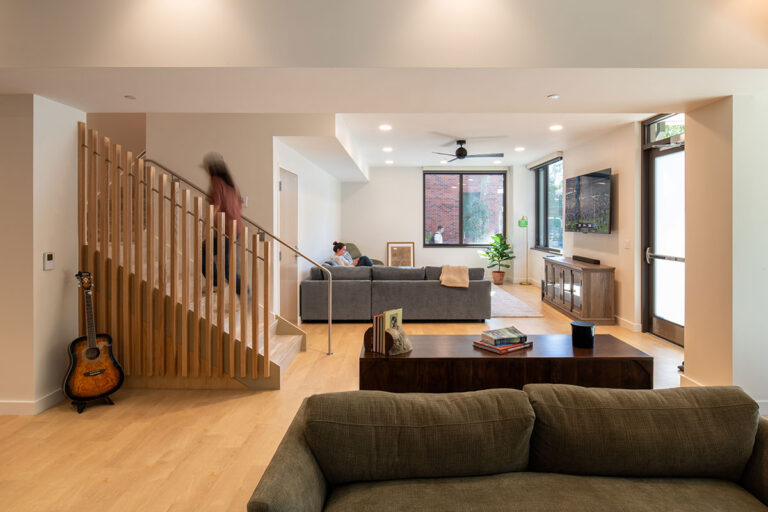
Client Satisfaction & Benefits
The completed project provides Tulane University with efficient, reliable, and maintainable infrastructure supporting approximately 198,500 square feet of student housing. Centralized controls and energy metering provide facilities personnel with greater visibility and control over building operations, while the integration of existing campus utilities maximizes the value of Tulane's established infrastructure.
The project documentation reports a 25% improvement in energy use intensity compared with baseline, more than 7.4 million kBtu in annual source-energy savings, an ENERGY STAR Design Score of 87, and a projected 12.8% reduction in annual energy costs. Plumbing strategies also achieved a reported 48.61% reduction in indoor potable water use.
Advanced Technology: The project incorporates energy recovery wheels, variable-volume outdoor-air distribution, scheduled ventilation, hydronic heating and cooling, centralized building automation, energy metering, high-efficiency lighting, occupancy sensing, and daylight harvesting. These systems work together to respond to the variable occupancy patterns of student housing while reducing energy consumption and improving operational control. The project is designed to achieve LEED Silver certification and supports Tulane University's long-term sustainability objectives.