University of Louisiana at Lafayette Football Stadium
University of Louisiana at Lafayette Football Stadium
- Lafayette, Louisiana
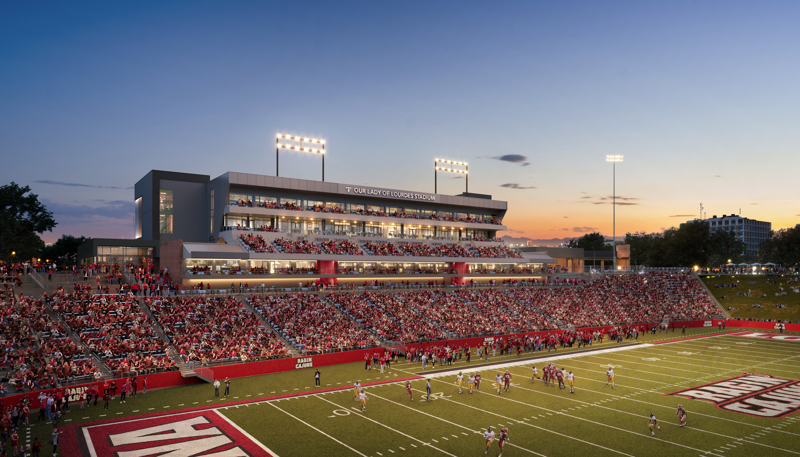
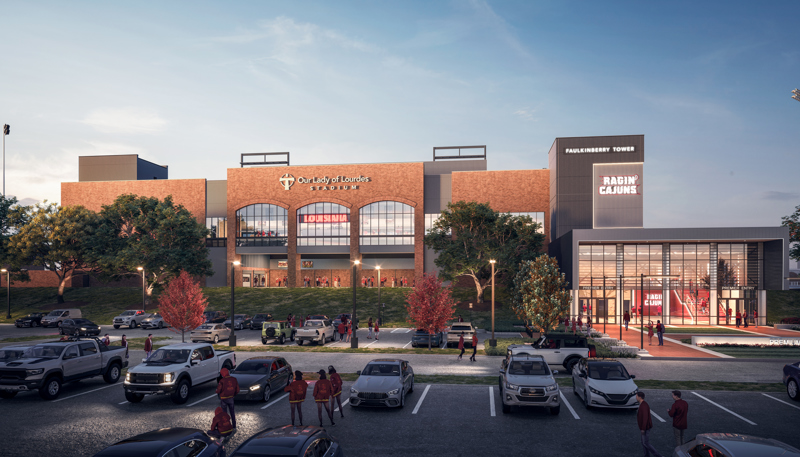
Technical Hurdles:Associated Design Group, Inc. provided full Mechanical, Electrical, Plumbing, and Fire Protection (MEP/FP) engineering design services for the new west side stadium at UL Cajun Field. The 68,106-square-foot expansion includes new concourses, a club level, and premium suites, along with 6,133 additional seats—bringing the total capacity to 28,025. To maintain uninterrupted home games during construction, ADG engineered a temporary press box and field lighting system, allowing the university to avoid costly rental of an alternative stadium.
Logistical Constraints:Design and construction had to be phased to ensure that the 2023 and 2024 football seasons proceeded without disruption. ADG designed a new medium voltage electrical distribution system and a modern emergency power system sized to support future east side stadium renovations. The HVAC system was designed with Variable Refrigerant Flow (VRF) technology, providing energy efficiency, zoning flexibility, and comfort across multiple levels of premium seating.
Client Satisfaction & Benefits
The upgraded Cajun Field provides fans with an enhanced game-day experience through improved concourses, club-level amenities, and modern seating options. The electrical and mechanical upgrades ensure long-term flexibility for future stadium growth, while the VRF HVAC system improves operational efficiency. By delivering temporary infrastructure solutions, ADG enabled the Ragin’ Cajuns to maintain their home-field advantage throughout construction.
Advanced Technology :Key systems include a VRF-based HVAC solution for energy-efficient comfort, a new medium voltage electrical distribution system, and a resilient emergency power design to safeguard operations. Temporary field lighting and press facilities showcased ADG’s ability to combine short-term adaptability with long-term infrastructure planning, ensuring the facility remains competitive for decades to come.